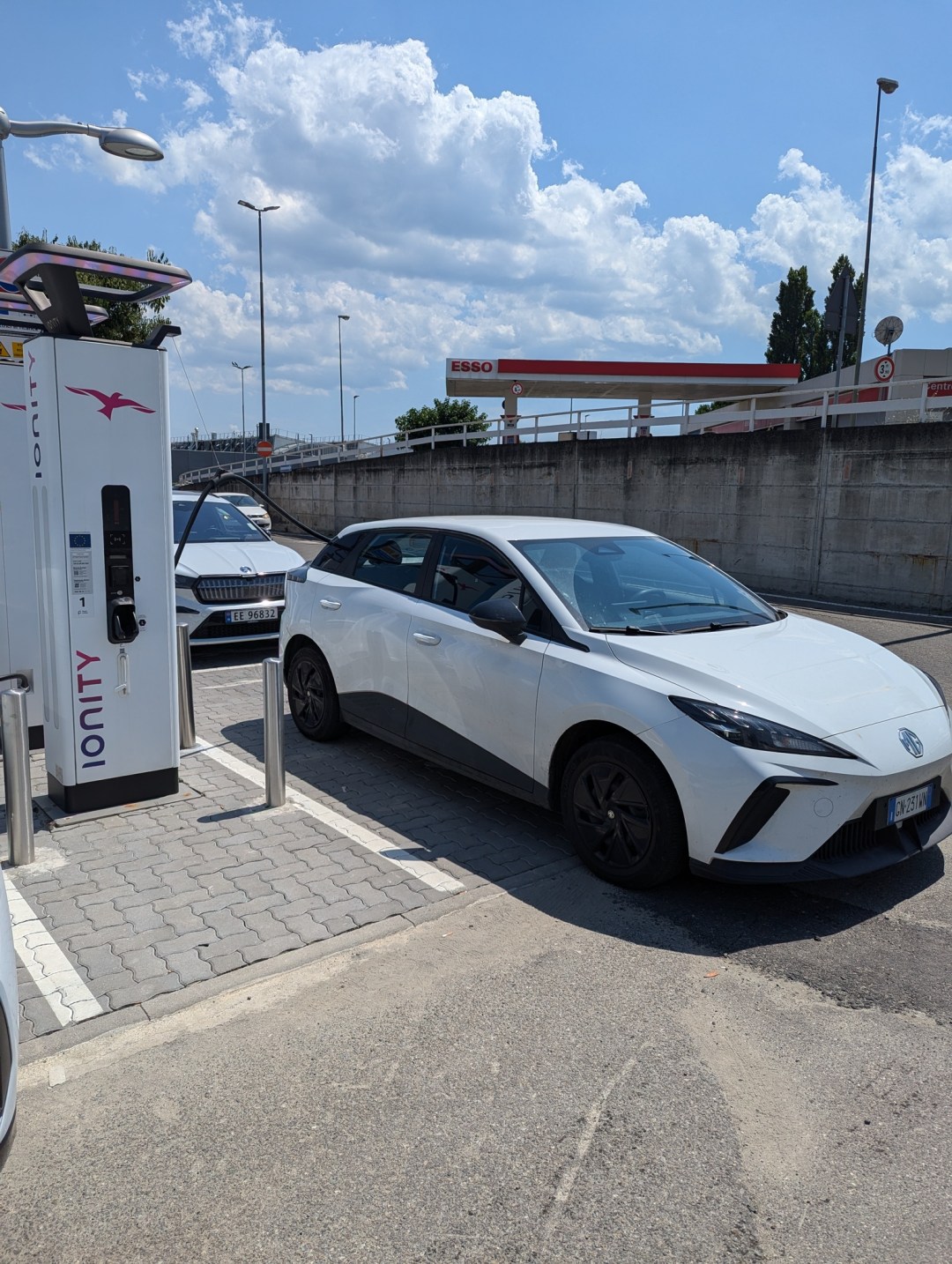
I took the opportunity of this event to rent an MG MG4 Electric car. Since the venue of the course I attended was about 450 km away from my home, it was a good chance to experience the use of an electric car on a long journey. In previous cases, I had always covered relatively short distances and had focused on aspects more related to functionality. As in similar tests done earlier, I would like to highlight the aspects that I think are most relevant to the overall user experience this product offers.
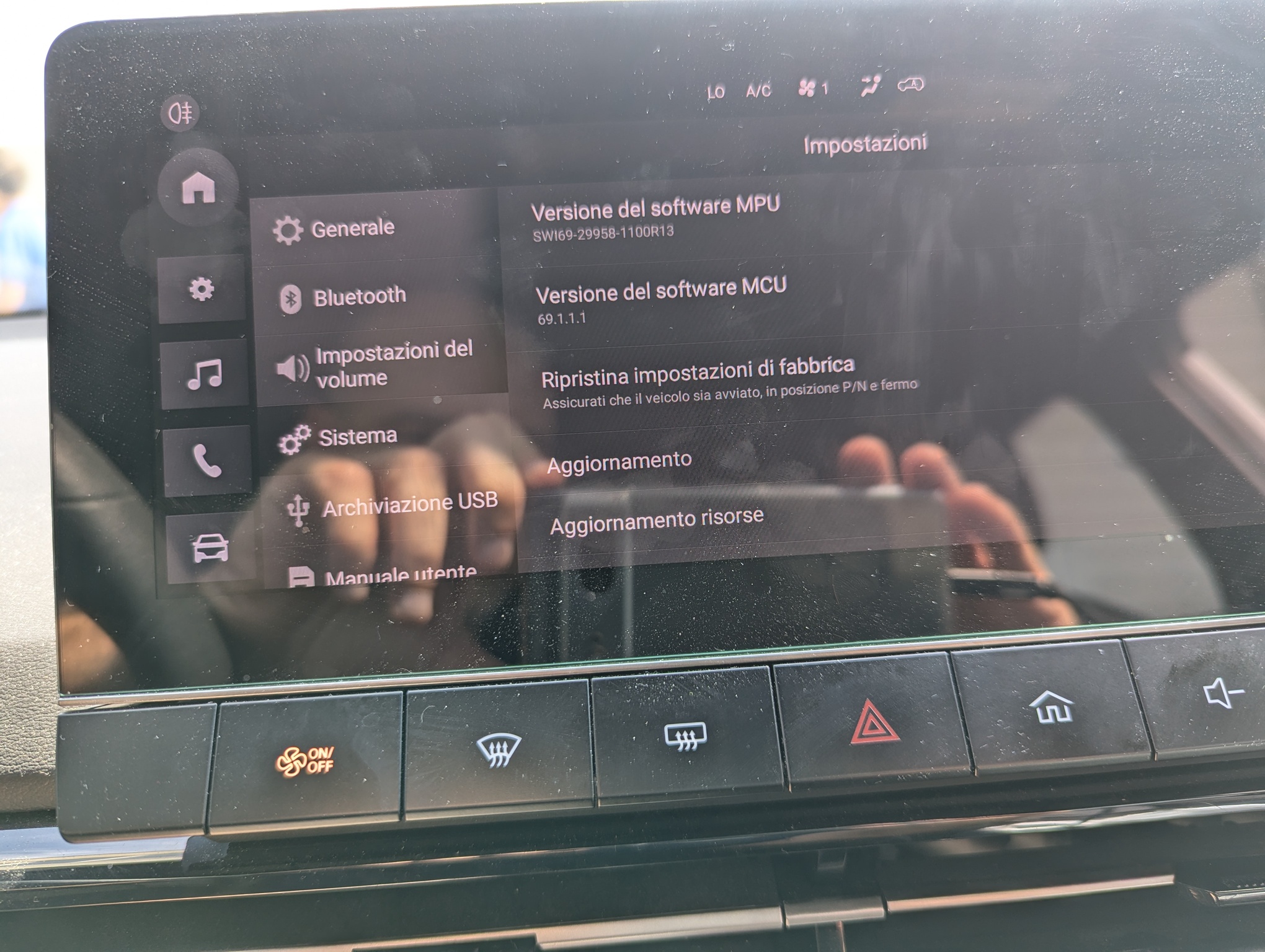
None of the official documents I received indicated exactly the arrangement of the car that was delivered to me. Anyway, I’m pretty sure it was the “Standard” version, so the cheapest in the line. Therefore, we are talking about a vehicle that costs about 31,000 euros. Of course, this has to be kept in mind when expressing your assessments, especially taking into account the inevitable influence of the recent test I carried out with a Tesla Model Y Long Range AWD that is clearly positioned in a much higher class. Although the MG4 does not have a sophisticated set of features as that of the Model Y, I have to say that I was very positively impressed by driving comfort, which was well beyond my expectations. In this respect, the overall UX is not so different from that tested with the Tesla. Most of the time, you actually drive the vehicle with a “one-pedal” approach (that becomes “zero-pedal” on lengthy highway sections thanks to cruise control). The acceleration is also great, at least for a modest driver like me—the 125 kW engine that drives this car seems more than adequate for its 1600 kg weight. When you press the accelerator, whether you start from a stop or you do it at a relatively high speed, the instantaneity and fluidity with which the traction delivers power to the ground are extremely satisfying when compared to an ICE car.
Before I started the trip, I was a little concerned about the driving position. Being a relatively low car compared to an SUV, I was afraid that, after 5 hours of travel, I would have suffered from some back pain. Instead, I was positively surprised in this respect as well. Although my preference remains for vehicles with higher seats, once arrived at my destination, I did not feel tired and I would have been able to continue to ride for more hours without difficulty if necessary. At the end of the day, I think this is the most effective indicator of the actual driving comfort of this car.
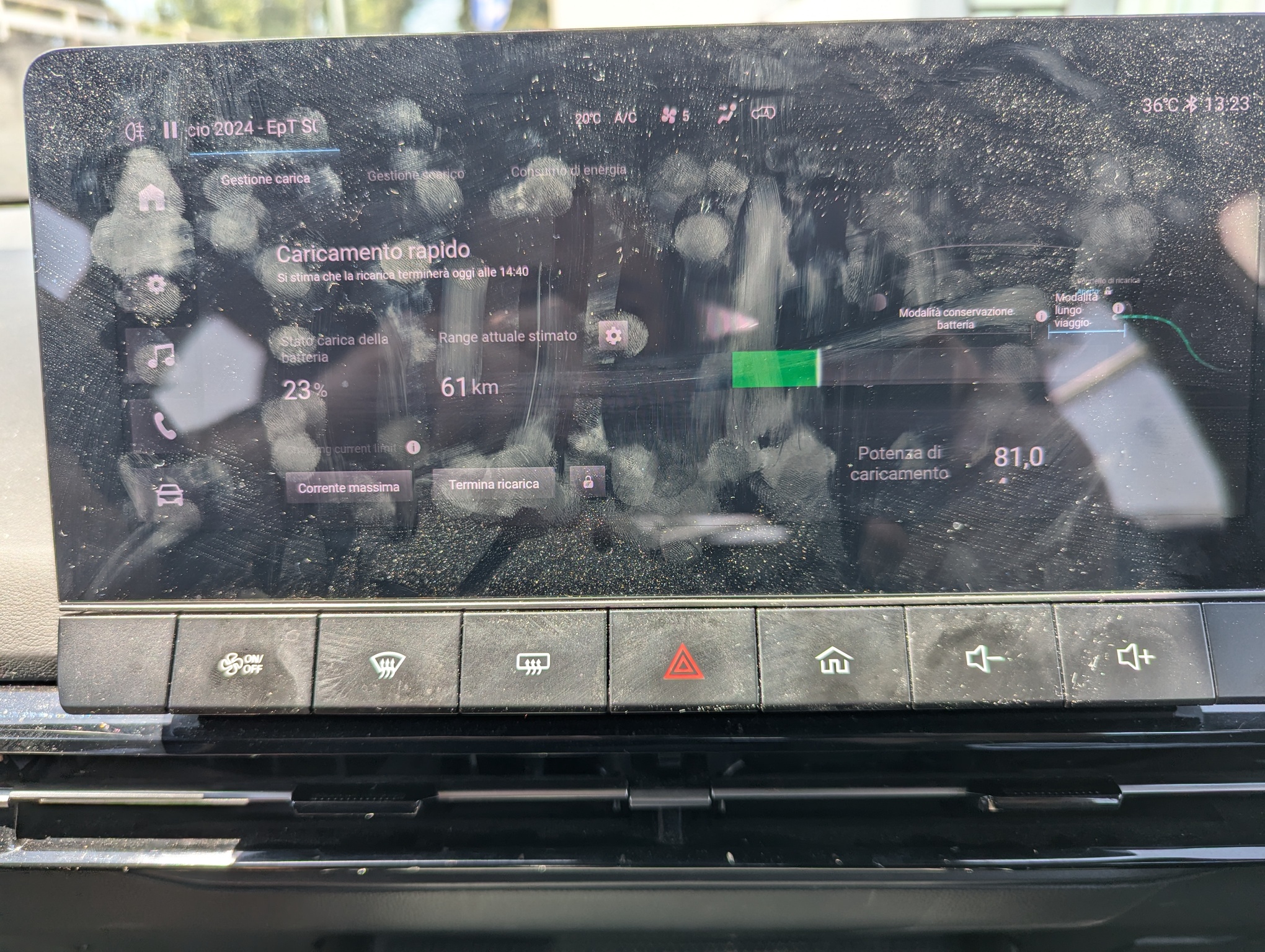
The harsh notes of this test address everything concerning autonomy. In retrospect, this makes sense given that the manufacturer claims a range of up to 350km (WLTP) for this specific variant. First of all, I was able to observe in person how much the energy consumption increases exponentially as the speed exceeds a certain threshold which is around 110 km/h. Going faster than 130 km/h (the highest speed limit on Italian highways) is suicide, as I’ve discovered firsthand. The reduction in time required to get to your destination does not compensate at all for the increased energy consumption. This fact, combined with the charging challenges that I have encountered and will detail soon, has caused me to suffer the well-known “range anxiety” that is widely discussed in the realm of electric vehicles. In essence, the 51 KWh battery of this model makes the car unsuitable for long-distance journeys. Period.

I conclude this post with a few notes about recharges. Unlike previous tests, I had the chance to try recharging stations from various companies in addition to Enel X and Eni Plenitude, which are by far the most popular in the area where I live. In general, I advise those who intend to buy an electric car to keep in mind that to date, the spread of charging stations is not bad all considered, but that
- many of these are low-power (i.e. less than 22 kW)
- the network is rather heterogeneous and there is still a long way to go for good interoperability.
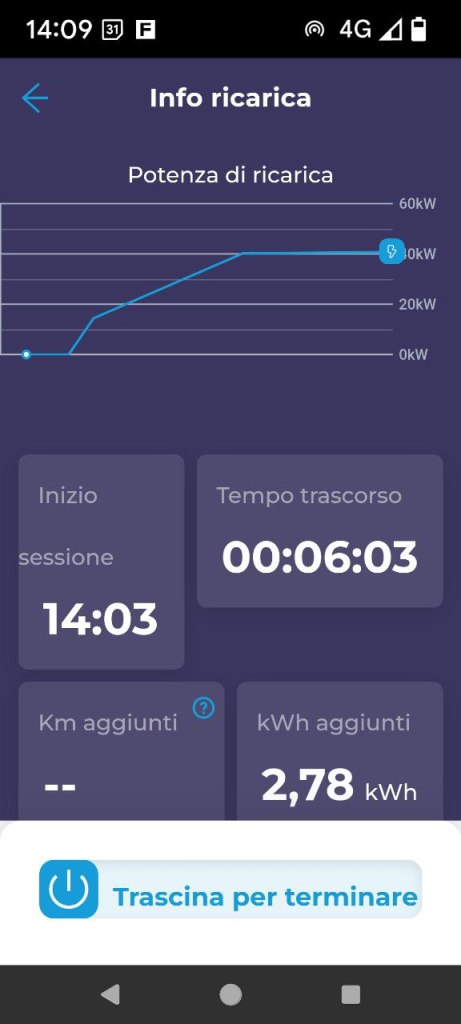
The first point is clearly very relevant in case you use the car for long journeys. Charging times with stations under 22 kW can be a major issue because it is not always possible to handle them efficiently. The second point means in practice that you have to arm yourself with a good set of applications—basically one for each company—to have a good confidence that everything will work properly. Even in this way, however, it should not be forgotten that the inconvenience is always around the corner. Also on this trip, for example, it occurred multiple times that the charging process started correctly, but then stopped abruptly. If you move away from the car in the meantime and you have no way to monitor remotely the charging process, you risk losing a lot of time because you realize the problem only when you get back on board. The following screenshots show some applications that allow to monitor and control the charging process remotely.

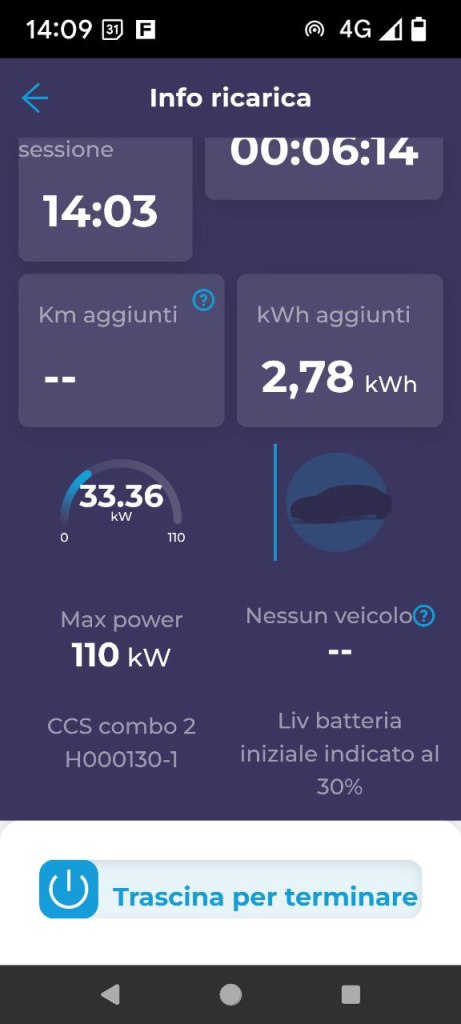
But the problem that literally made me sweat cold was another one. With a charge level just above 20%, I stopped at a Tesla supercharger adjacent to a hotel near Arezzo. Although the MG4 has a CCS Combo 2 socket which is compatible with Tesla plugs, the vehicle was not able to establish logical connection to the station. In other words, the car and the station were not able to talk to each other for starting the charging process. “It is not a big deal, I’ll move to the nearest station,” I naively thought to myself. As a matter of fact, I did not take into account another problem: the car was not able to release the plug either! I had to battle a lot before I managed to free the MG4. In the end, I sorted it out by locking and reopening the car over and over again until it finally unlocked the plug. Again, analyzing what happened cold-mindedly, I realized I had forgotten a fundamental lesson: these devices are smartphones with wheels. As such, they are powered by tons of software that may have bugs of any kind …


 LLandre.com